
Retail Leaders Share Promotions That Drive Demand Without Deep Discounts
Deep discounts are not the only way to drive demand. Retail experts share practical promotion tactics, from loyalty rewards and product bundles to limited-time offers and added value. These strategies help retailers attract buyers, protect margins, and turn each campaign into a measurable growth opportunity.

§ How this was made
The perspectives in this article were written by the named contributors and submitted through Connectively. Connectively's automated system selected them and used AI to write the headline, introduction, section headings, summary sections, and illustration, and to make minor edits for clarity. Articles are assembled and published automatically. Report errors to corrections@connectively.us. How we make our content
 Q&A
Illustration generated with AI
What the experts said
 JD
 FR
 DS
 KS
 CB
 CC
 JP

- Make Deals Impossible to PredictWill Mitchell
- Link Savings to Buyer ActionsJörg Dennis Krüger
- Lead With Product ExpertiseFelix Römer
- Add Extras Instead of MarkdownDawn Stutzman
- Reward Commitment, Not HesitationKruno Sulić
- Teach Goalkeepers Before CheckoutChristian Benjamin
- Give Every Sale a Clear CauseChristopher Coussons
- Rotate Incentive Mechanics Across CyclesJimi Patel
- Protect Your Flagship From CutsMING-YUAN XIE
- Promote Convenience, Preserve Everyday ValueEmma Rusby
- Award Loyalty Points for OrdersHope Johnson
- Cap Category Reductions at Fifteen PercentKade Robertson
- Bundle Accessories With Main ProductsTammi Longstaff
- Move New or End-of-Line InventoryChen Yang
- Define Goals Before Each CampaignAndrew Priobrazhenskyi
- Measure Demand After EventsDaniel Goh
- Offer Easy Trials, Hold Rates SteadyJens Hagel
- Favor Volume Over TimingConor Smart
- Match Outreach to Local MarketsLuca Borreani
- Base Discounts on Margin MathIshant Sharma
- Use Evidence for Selective PromotionsPayam Shayesteh
- Build Loyalty Through Limited DropsAaron Beebe
Make Deals Impossible to Predict
I won't put a discount on the calendar. If shoppers can predict when my price drops, I've basically published a second, cheaper price list and told everyone to wait for it.
So every promotion I run is tied to a reason that doesn't repeat on a schedule. That could be a new product going live, a bundle that only exists for a short window, or a bonus for people who buy during a launch. The list price on my core offer stays put. When I want to push demand, I add something to the order before I take anything off the price.
A bonus or a bundle usually costs me less than the dollars I'd give away with a straight percentage off, and it doesn't reset what the buyer thinks the product is worth. Someone who paid full price last month doesn't feel burned, because the next person got an extra while the price stayed the same.
Before I approve any promo, I ask whether a customer could have seen it coming six weeks out. If the answer is yes, I rework it or kill it. When I've run predictable sales, they mostly pulled purchases forward from people who were going to buy anyway, and my full-price weeks went quiet.
Link Savings to Buyer Actions
The rule I would defend is that a discount should be attached to something the customer cannot put in a calendar.
A recurring promotion teaches a schedule. If the tenth of the month is always discounted, the rational customer waits for the tenth, and you have not bought demand, you have moved it and paid for the move. A condition the customer cannot schedule behaves differently: buy three and the fourth costs less, complete the set, take the bundle, order before the season starts. None of those can be waited out by simply doing nothing, because the saving depends on an action rather than a date.
Second rule: do not discount the item that sets the price expectation. Discount the adjacent product, the accessory or the bundle. The moment the hero product appears at a lower number, that number becomes the reference, and everything after it looks overpriced.
One warning from our own cart tests, and it is about presentation rather than price itself. We tested volume tiers plus a shipping calculator inside a B2B cart, and revenue per user fell 52.58 percent over 1,770 users and 100 days.
The offer was more transparent and the cart was harder to read, and the simpler cart won. If a promotion needs a paragraph to explain at checkout, it is not a promotion, it is a puzzle with a discount attached.
Lead With Product Expertise
Our rule: a discount is never the first thing a new customer hears from us.
I run e-commerce and IT at a German online retailer of garden and forestry equipment. The first contact with a new visitor used to be a pop-up offering money off for an email address. It grew the list quickly. When I split revenue by signup source, that group had barely bought anything. We had taught them one thing about us before they had seen a single product: that there is a code, and that it is worth waiting for.
So the pop-up went, and the ask moved to the first email after a purchase. It offers maintenance reminders and seasonal tips for the exact machine the customer just bought. About 11 percent of buyers accept, 95 percent of those confirm the double opt-in, and that group has the highest repeat-purchase rate of any segment we have built. A reminder to sharpen a chain before winter tends to sell a chain without a price cut.
We still run promotions. A seasonal business has seasonal sales, and pretending otherwise would be silly. The difference is who they reach and why. A campaign tied to a season gives a customer a reason to buy now. A standing discount for showing up gives them a reason to wait.
I cannot prove what the pop-up cost us in margin. I can say what it bought: a long list of people waiting for the next code.
Add Extras Instead of Markdown
In our family's metal plating business, I've learned that promotions work best when they give customers a reason to act without making them question the regular price. My rule is to offer added value rather than automatic discounts, especially when labor, materials, and finishing quality directly affect our margins. For example, when a customer has several pieces that need plating, we can discuss combining them into one production run to reduce handling and setup costs instead of simply cutting the price. That approach helps customers see the financial benefit while allowing us to protect the value of our work. I believe retailers can apply the same principle through product bundles, exclusive services, or limited-time added benefits rather than constant percentage-off sales. The goal is to reward purchasing decisions without teaching customers that waiting will always get them a better deal.
Reward Commitment, Not Hesitation
Retailers avoid training shoppers to wait for discounts by making promotions feel conditional and purposeful, not constant. The rule that has worked best in my businesses is simple: never run predictable, sitewide discounts on the core offer. Instead, tie incentives to a specific behavior, bundle, threshold, or time-sensitive event. That protects the reference price while still giving people a reason to act now.
In practice, the healthiest promotions tend to reward commitment, not hesitation. Examples include a bonus for first purchase, a bundle that raises average order value, a credit toward a second order, or a threshold-based offer that improves unit economics. Those work better than repeating "20% off everything" because they create urgency without teaching customers that the regular price is fake.
A useful test is to ask, "If a customer sees this offer three times, do they start delaying purchases?" If the answer is yes, the promotion is too broad or too frequent. Once buyers learn your calendar, margin erodes fast because full-price demand gets pulled into discount windows. Predictability is often the real problem, not discounting itself.
I also think retailers should separate acquisition offers from retention offers. New customers may need a stronger reason to try you, but existing customers usually respond better to exclusivity, early access, limited bundles, loyalty perks, or value-added extras rather than blanket markdowns. That keeps your best customers engaged without resetting price expectations for everyone.
The promotion rule I like most is this: discount for a reason customers can understand, and only where the math still works after fulfillment, returns, and repeat-purchase behavior are considered. If a promotion cannot improve contribution margin over the customer lifecycle, it is probably just borrowed demand.
The retailers that protect margin best are usually the ones that treat promotions as a scalpel, not a habit. When offers are targeted, occasional, and tied to a business objective, they drive demand. When they become routine, they train customers to wait.
Teach Goalkeepers Before Checkout
Choosing the wrong goalkeeper glove wastes time and money. At Keeperstop we are not concerned with a race to the bottom or the lowest price. There are plenty of discount retailers out there. Keeperstop.com is the goalkeeper glove and equipment expert, and our focus is always customer service first and product knowledge, so a goalkeeper selects the glove that meets their budget and playing need. That is the rule that protects our margin: a promotion is never the reason to buy. The education is.
Because of that, our sales are tied to real situations, not a calendar. Goalkeeping is a fashion-forward position. Goalkeepers like a matching kit and gloves, and every so often we choose a style that doesn't connect with our goalkeepers. When that happens, it goes on sale. We turn that product back into cash, learn from it, and work to get the next one right. Quality is a different matter. If a soccer goalie glove doesn't meet our standards, it doesn't go on sale. It goes back to the manufacturer with specific feedback from us and from our customers.
When something is on promotion, the customer still gets the full story. We test all soccer goalie equipment ourselves, and every product page carries our own review: what the latex does, which hand shape and playing surface the glove suits, and how it compares at its price point. A parent understands why the glove performs before they see the price, so the discount reads as good value on the right glove, not a reason to wait for the next markdown.
The other thing that drives demand without discounting is honest value at full price. We listened to goalkeepers, parents, and goalkeeper coaches who were concerned about the rising cost of goalkeeper gloves with the best grip. That is why we started the KPR goalkeeper glove brand, exclusive to Keeperstop.com, to provide elite-level performance at a more reasonable price point. When the everyday price is fair, customers don't feel they have to wait.
A cheap glove that doesn't fit, or falls apart on turf, saves nobody anything. Our customers know we will tell them that, and that trust is why we have customers who have been calling us to check in and order since 2005.
Give Every Sale a Clear Cause
The promotion rule I give retailers is that a discount must have a reason the customer can see, such as a season ending, a bundle or a launch, and it must never run on the same calendar two years running. Shoppers learn to wait when sales become predictable, and the fastest way to make them predictable is a rolling "20% off this weekend" email every month.
The paid search side shows why it matters. Discount homeware, generic consumables and low-end fashion under £30 retail almost always lose money on Shopping. Constant discounting pushes a brand into exactly that position. Margins thin out, ad costs stay the same, and every pound of profit has to be bought back with more traffic.
What works better for a typical retailer I work with is rewarding behaviour instead of waiting. Early access for email subscribers, a gift with orders over a threshold, or a bundle that raises the basket all create a reason to buy now without cutting the headline price. When a genuine sale does run, I keep it short, tie it to something specific and let it end on time, because a sale that gets extended teaches people that the deadline was never real. The test I use is simple: if a customer could guess the date of your next promotion, you have already trained them to wait for it.
Rotate Incentive Mechanics Across Cycles
Shoppers do not learn to wait because you discount. They learn because your discount is predictable. On Amazon that is literally visible: anyone can pull up a price history chart on Keepa and see that your ASIN drops 20 percent in the first week of every month. Once that pattern exists, your full price becomes a suggestion.
The rule we hold to across managed accounts is to change the mechanism, not the price. Each cycle we rotate between a coupon with the badge on search results, a Subscribe and Save tier, a multi-unit discount, and a Prime Exclusive Discount. The shopper still gets a reason to buy now, but the pattern never resolves into a date they can wait for.
Second, the discount has to be funded by something other than margin. A coupon costs the face value plus a redemption fee on every order, so on a thin SKU it quietly turns a profitable unit into a loss. Before approving anything we check the referral fee tier and the fulfillment fee for that size band, set a floor price the promotion cannot cross, and never let a deal stack on top of a live coupon.
Third, and this is the one most sellers miss: tie the promotion to a job, not a calendar. Clearing aged units before long term storage fees hit. Defending a launch window. Recovering Featured Offer share after a competitor undercut. A promotion with a job has an end condition built in. A promotion on the calendar runs forever and teaches exactly the behavior you are trying to avoid.
Demand that only shows up when you discount is not demand. It is rent.

Protect Your Flagship From Cuts
The mistake is treating a promotion as a marketing decision when it is a margin decision.
Categories have different room. In the businesses I ran, packaged food sat around 60-65% gross margin, supplements around 65%, skincare around 70%, and cosmetics can run at 80%. A 20% discount on an 80%-margin product is still a healthy sale. The same 20% on a 60%-margin product wipes out most of what you were going to earn. So the first rule is that a discount has to be funded by the margin structure of the specific product, not by the campaign calendar. If you cannot name which product's margin is paying for the promotion, you are not running a promotion, you are running a loss with a banner on it.
The second rule is about what the shopper actually learns. Customers are not trained to wait by discounts; they are trained to wait by predictable discounts. A sale that arrives on the same dates every year, at the same depth, on the same catalogue, teaches people exactly when to stop buying at full price. What breaks the pattern is varying what is on offer rather than how often, so the habit cannot form around a specific item.
The third is to use product mix instead of price. If you want blended margin to rise, shift the sales mix toward higher-margin items rather than cutting prices across the board. Concentrating marketing on the stronger-margin products moves overall margin up a point or two without a single markdown, and adding one genuinely high-margin line does more than any discount strategy will.
The rule I would actually hand someone: never discount the product you most want to be known for. That product is doing a different job. It is building the brand and your negotiating position with suppliers, and that position is worth more than the volume a markdown would buy. Discount around it, not on it. Once your signature product has a sale price, that becomes its real price, and you do not get it back.

Promote Convenience, Preserve Everyday Value
I plan promotions around a reason to buy now that is not a permanent price cut. Newness, a bundle that saves wash day steps, or free delivery over a clear threshold beats training shoppers to wait for 20% off every Friday. The promotion rule that protected margin for me is to discount only when stock, season or a genuine product story justifies it, and to keep the everyday price stable the rest of the time.
That rule matters in curly retail because customers already spend real time and money on routine. My wash day report put textured hair care at 132 hours a year, worth £2,534 at median pay, so a cheapening spiral does not make the routine feel more valuable. Free delivery over £40 and the odd express option can move baskets without rewriting the price list. Promote access and usefulness. Keep the shelf price as the default story.

Award Loyalty Points for Orders
Attach the reward to the purchase itself rather than to a date shoppers can learn to wait for. Our points program earns customers five points per dollar spent on qualifying orders, so the incentive comes from buying, not from a sale anyone can see coming. Points that go unredeemed lapse once an account has gone a year with no points activity, which gives people cause to come back within that year. The points program isn't our only kind of promotion, and I can't give you margin figures for it, but the logic is simple: a reward you earn is a reason to buy now, while a discount you expect is a reason to wait. What I'd suggest is tying promotions to something the customer does, not to a date they can predict.

Cap Category Reductions at Fifteen Percent
I don't do sitewide sales. Will never do them. If you give everyone a sitewide sale they will always wait for your next one. What we will do is offer sales by category with a reason. Clearing out our summer toy line in August. Selling beauty sets for holidays. The reasoning here is that it gives the buyer an idea that this is a once-in-a-while event.
We also only discount items by 15% if it's something we may want to sell at full price down the road. Anything higher than 15% is an item we are looking to get rid of. So never go over 15% if you want to maintain your prices. Always have a reason and category when doing sales. That's how we stopped doing "big sales".

Bundle Accessories With Main Products
Tie promotions to real moments in the season, not to the calendar, and discount the add-ons rather than the main item.
Outdoor cooking is very seasonal. Most griddle sales happen between April and July, when people are opening up the patio and replacing an old barbecue. A promotion at the start of that window helps someone who was already planning to buy. The same discount repeated every few weeks just teaches shoppers that full price is for people who didn't wait.
Our rule of thumb is to protect the price of the main product and put the value into what goes with it. Someone buying a griddle is going to need a cover, a tool kit and maybe a natural-gas conversion. A deal on that bundle feels generous to the buyer and costs us less than cutting the price of the griddle itself. It also means the customer leaves with a better setup and fewer reasons to come back with a return.
Two more rules that help: Keep promotions short and give them a real end date. If the end date keeps moving, nobody believes the next one.
Never mark up a price just to mark it down. Shoppers compare prices across stores in seconds, and a fake "was" price is easy to spot.
A promotion should give people a reason to buy now. It shouldn't give them a reason to wait.

Move New or End-of-Line Inventory
The rule I'd hold is never discounting the products people already buy happily at full price, and using promotions only on items with a reason to move, such as the end of a line or a new arrival that needs a first push. Shoppers learn to wait when their favourite item keeps going on sale, but a promotion on something they weren't already planning to buy creates demand rather than delaying it. Every offer should also come with a plain reason, because a discount that is explained as a clearance or a launch doesn't suggest that the regular price was inflated. Margin stays protected because the full-price core of the range is never part of the deal, while the promotions still give shoppers something new to look at.

Define Goals Before Each Campaign
I'm Andrew Priobrazhenskyi, Founder and CEO of DiscountReactor. I've worked in SEO and affiliate marketing since 2004 and have been involved in the coupon and deals industry since 2012. Through this work, I've seen how retailers use promotions to influence purchasing decisions, attract new customers, and compete for visibility.
One of the biggest mistakes retailers make is treating discounts as a universal solution to slow sales. When promotions become too frequent, customers learn to postpone purchases until the next sale. Over time, this can weaken perceived product value and put pressure on margins.
My recommendation is to introduce a simple rule: never discount a product without first identifying what additional behaviour the promotion is supposed to generate.
For example, if a product already sells consistently at full price, reducing its price may simply lower revenue on purchases that would have happened anyway. A better approach is to identify products that can benefit from additional exposure, seasonal inventory that needs to move, or complementary items that can increase the value of an existing order.
There are several ways to apply this: - Promote products with room to grow. Use discounts to generate demand for products with lower sales velocity rather than automatically reducing prices on bestsellers. - Use bundles to protect margins. Pair a popular product with a complementary item. Customers receive a stronger perceived offer, while retailers can increase average order value without discounting every product individually.
I would also encourage retailers to measure incremental revenue rather than simply counting orders made with a promotional code. A campaign can generate more transactions while still reducing profitability if too many customers use discounts on purchases they were already planning to make.
One practical way to evaluate this is to compare a promoted customer group with a similar group that did not receive the offer. This helps estimate whether the promotion actually changed purchasing behaviour.
Every promotion should have a clear objective, a defined audience, a margin threshold, and an end date. If customers can expect the same offer every week, the promotion eventually becomes part of the expected price rather than a reason to purchase.

Measure Demand After Events
1. Are your shoppers waiting for a sale? A test for this is to search for "promotional code for [your brand name]" in Google, and then ask for the same in ChatGPT and Gemini with memory disabled. Old codes and coupon sites would rank top for new shoppers - in most cases better than full price for customers who do look. So keep promotions private - send to email subscribers, past customers, abandoners, etc. Don't index the pages containing your offers in search engines. Instead, create campaigns to sell the reason to buy now - e.g., new stock arriving, seasonal needs, etc. (rather than promoting percentage off).
2. RankAISearch's rule for running promotions is to track a baseline for sales and margin before the promotion kicks off, as well as to track the "hangover" of a promotion (i.e., whether sales drop off below the baseline) for 2-3 weeks after the promotion has ended. One of the biggest killers of a promotion at RankAISearch is for the promotion to have drawn down demand for next month's sales at lower margins than normal. To track what worked to increase sales (i.e., raising conversion rate vs. increasing average order value), we change one thing for each promotion. Because our sample size for each promotion is very small, I treat each result as a signal (i.e., worth paying attention to) but not as proof of anything. And yes, this kind of tracking has killed way more promotions than it has added.

Offer Easy Trials, Hold Rates Steady
I sell software, so my promotions look different, but the worry about buyers learning to wait is the same. At Yupana the price stays the same all year, and anyone can test it for 14 days with their own figures, no card needed; the trial simply ends. In 2019 my IT firm swapped hourly rates for fixed monthly prices, cancellable each month, which put the conversation on the work itself. My rule is to make trying cheap and leave the price alone. Jens Hagel, Co-Founder, Yupana (Hamburg, Germany)

Favor Volume Over Timing
I'm Director at Arklavo, where we offer custom team uniforms and workwear with company logo. There's no minimum order and we don't charge set up or digitizing fees.
Discount automatically applies at checkout for larger orders, so there's no need to wait for a sale to receive a great deal on team apparel! Free shipping on orders over $150.
Instead of using a discount to drive sales during a specific time frame, we use quantity discounts to reward the size of the order instead of the time of the purchase.
I don't know the exact effect on our margins, but instead of waiting for a sale, customers receive a discount right away in their cart. As the quantity in their cart changes, so does the price.

Match Outreach to Local Markets
Retailers protect margin by planning fewer, narrower promotions, timed to when shoppers in each market are actually present, not by running a standing sale.
The planning rule I would use is: keep the everyday price stable, and promote only when you have a reason other than a quiet week. Before you cut a price, check what shoppers are asking for. If they want help finding a product, a sale will not fix the gap and it will teach people to wait. Answer that advice question well, and save the promotion for a short window when price is the real barrier.
In the Zipchat Labs study of 4.2M ecommerce conversations, advice requests were three times more common than requests for a discount: 33.4% of pre-purchase questions against 11.0% for price and discounts. Peaks also differ by market. French speakers peaked at 10 am, Italians at 3 pm and German speakers at 8 pm. Italian shoppers asked about price and discounts 11.6% of the time, against 4.8% for UK shoppers.
The takeaway: write the promotion calendar around each market's local peak and around real price questions, not around a weekly discount habit. The study is here: https://www.zipchat.ai/zipchat-labs/001-what-shoppers-ask

Base Discounts on Margin Math
Our rule: set the discount from the margin, never from what competitors are running. We work out break-even ROAS at the sale price before a client's promotion goes live, because a discount comes straight out of the money that pays for ads.
The numbers move faster than most retailers expect. At a 40% margin, a store breaks even at 2.5x ROAS at full price, 4x at 20% off and 7x at 30% off. At 40% off there is nothing left to pay for ads at all.
What we use instead, depending on the product: a smaller discount on items with room in the margin, bundles priced from margin, or a free gift. A free gift also keeps the promotion eligible in Google Merchant Center, which exempts free gifts from its minimum discount rule.
On not training shoppers to wait: we advise against running a deeper "early" price before the main sale. In Google Shopping that matters for a second reason. The Deal Ends badge needs the sale price to be the lowest of the past 60 days, so a deeper early discount can cost a product the badge in the week that matters most.
Plan the promotion from margin, give it a real end date, and keep everyday prices honest. Shoppers learn that the sale is real, and you do not have to buy the demand back with ad spend.

Use Evidence for Selective Promotions
At Le Lika, we tested ongoing storewide discounts and found no meaningful improvement in demand. This was particularly noticeable during peak shopping seasons, when customers appeared more interested in finding the right product than waiting for a discount.
Our promotion rule is simple: discounts must respond to product-level evidence. We monitor impressions, clicks and sales, then apply gradual discounts only to products attracting interest but not converting sufficiently. Products already selling well are not discounted unnecessarily. We combine this approach with limited-time seasonal promotions, minimum-spend offers and value-added benefits such as gift wrapping. Low-margin products are excluded, ensuring that promotions drive demand without sacrificing contribution margin.
Build Loyalty Through Limited Drops
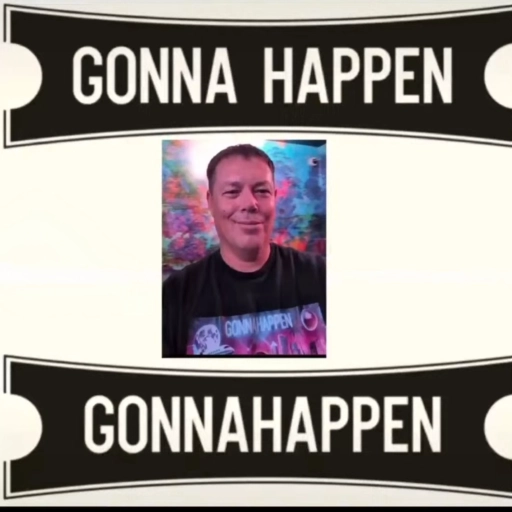
I run a small online shop for my brand GONNAHAPPEN: tees, hats, beanies, stickers. My rule is I protect my margin by not buying it using Ecommerce at the start before cut and sew. I put in the extra hours myself making my own promotional material and creative reels instead of paying for ads. Work with Boutique Hub and being educated has helped me as well. One small 10 percent code or other percents and that's it, I don't train people to wait for a sale. The rest is the drop, limited pieces, limited time, and the story behind it. And collaborations always help. I work with other artists and creators and we promote each other, and that saves me on marketing. People buy because they want that piece, not because it's cheap. A discount gets you a sale once. A drop people care about gets you a customer who comes back.
Write for us
Have something to say about this beat?
Submit an article or do an interview for Retailing Central.
Write for us →Also on the shelf
 Q&A
Retail Promotions: Find a Discount Cadence That Drives Traffic Without Killing Margin
Retailers face a constant challenge: attracting customers with promotions while protecting profit margins. This article examines practical strategies for building a discount schedule that balances traffic growth with healthy margins, drawing on insights from industry experts who have successfully implemented these approaches. The following tactics demonstrate how to structure promotions that drive sales without eroding the value of your products.
Retailing Central Q&A
Retail Promotions That Shoppers and Store Teams Can Execute
Promotions should be easy for shoppers to understand and store teams to execute. This article shares practical ways to prevent pricing errors, confusing terms, and stacked discounts. Insights from retail experts show how clear rules, shared messages, and early store input lead to smoother campaigns.
Retailing Central Q&A
ESL Dynamic Pricing That Protects Margin
Electronic shelf labels are transforming how retailers manage pricing strategies, but implementing them effectively requires careful planning to protect profit margins. This article explores proven approaches to dynamic pricing that balance competitiveness with profitability, drawing on insights from retail pricing specialists. Learn how tiered markdown strategies can help reduce waste while maintaining healthy margins in today's fast-paced retail environment.
Retailing Central Q&A
Retail Leaders Share Returns Policies That Build Trust and Limit Losses
Returns policies can make or break customer loyalty, yet many retailers struggle to balance trust with profitability. Industry experts reveal practical strategies that protect revenue while maintaining shopper confidence through clear guidelines and smart verification processes. These proven approaches help retailers reduce losses without sacrificing the customer experience.
Retailing Central