

 Article
The Store Manager of 2026: A Role That No Longer Looks Like It Used To
For a long time, the store manager's role was fairly straightforward. Keep operations running, manage staff, ensure shelves are stocked, and hit daily sales targets. That version of the job is fading quickly. In 2026, the store manager is no longer just an operational supervisor. They are becoming a hybrid role that blends experience design, data interpretation, and community leadership. And that shift is not cosmetic; it is structural, driven by omnichannel retail, real-time analytics, and rising customer expectations for seamless experiences across every touchpoint.
Why This Shift Is Happening Now
Retail operations are no longer contained within the four walls of a store. A customer may discover a product online, check availability in-store, reserve it through an app, and complete the purchase in person or via home delivery. That journey does not belong to separate teams anymore; it converges at the store level. This means the store manager becomes the real-time decision point for experience quality, inventory accuracy, and customer satisfaction. At the same time, data systems are giving managers more visibility than ever before, but only if they know how to interpret and act on it.
From Supervisor to Experience Curator
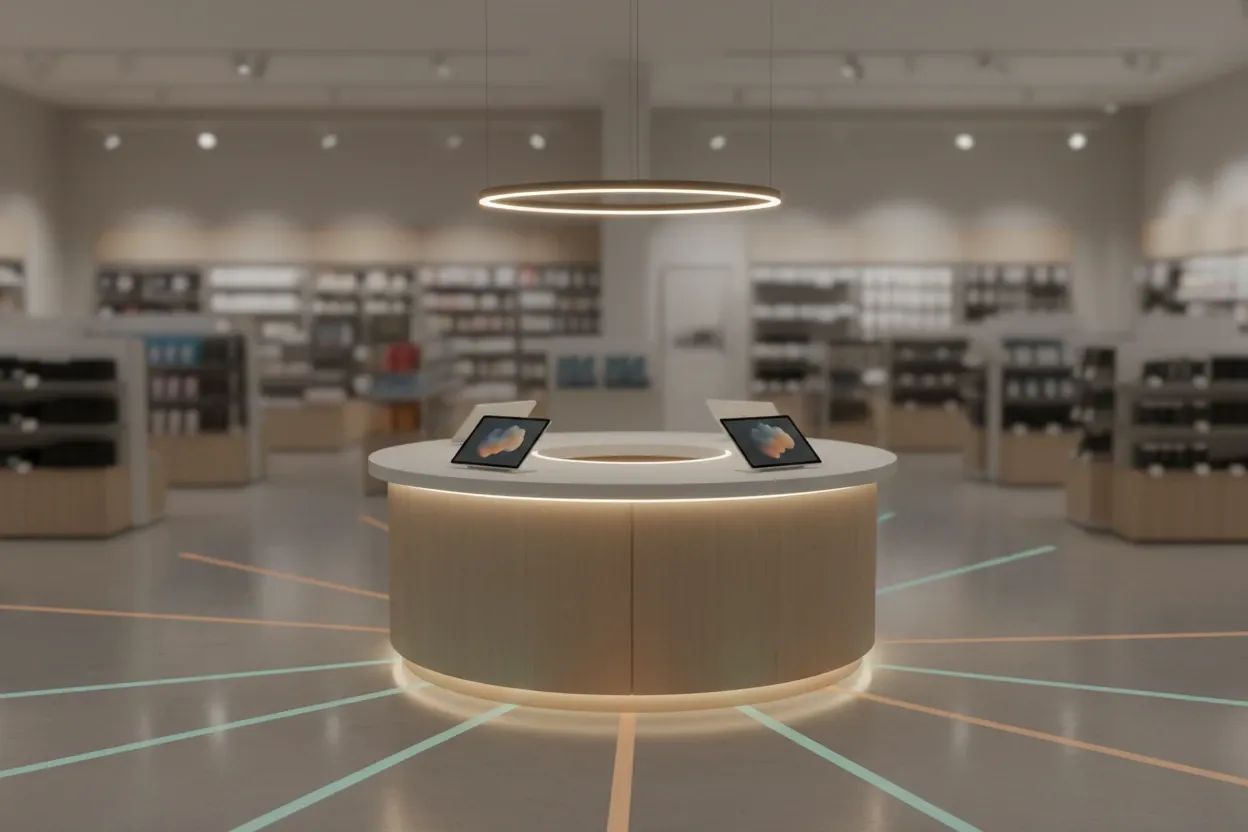
One of the biggest shifts is that store managers are now expected to shape the customer experience actively, not just supervise staff execution. This includes how the store feels, how staff engage, how fast issues are resolved, and how seamlessly the journey flows between online and offline. In practice, this means decisions around staffing patterns, floor layouts, product placement, and service recovery are becoming experience design decisions. The manager is effectively curating how customers move through the brand in real time.
The Rise of the Store Manager as a Data Interpreter
Another major shift is the increasing reliance on data at the store level. Sales dashboards, footfall analytics, conversion rates, return patterns, and inventory velocity are all now accessible in near real time. But data alone does not improve performance; interpretation does. The modern store manager needs to understand what the data is signaling operationally. For example, a drop in conversion might not be a marketing issue; it could be staffing misalignment or product availability gaps. Similarly, high return rates may indicate merchandising or expectation-setting issues rather than product quality alone. The role now requires pattern recognition and operational translation, not just reporting.
Store Managers as Community Builders
Physical retail is increasingly being redefined by experience and community rather than just transactions. Store managers are now responsible for building local relevance. This could mean hosting small events, engaging with repeat customers, partnering with local communities, or tailoring product assortments based on neighborhood behavior. In many cases, the store becomes a micro-brand within the larger retail brand, and the manager is the one shaping its identity. This is especially important in competitive urban markets where product differentiation alone is not enough to drive loyalty.
The Capability Shift Retailers Can’t Ignore
As the role evolves, the skill set required also changes significantly. Traditional operational training is no longer sufficient. Store managers now need a blend of capabilities across three areas—first, analytical capability to understand dashboards and convert insights into actions. Second, customer experience thinking to design better in-store journeys actively. Third, leadership and communication skills to align teams around fast-changing priorities. Without this mix, even strong operational managers struggle to keep up with modern retail demands.
What Organizational Support Needs to Look Like
Retailers often promote strong store managers but fail to support them with the systems they now need. The biggest gap is training and tooling. Many managers are given data access but not data literacy training. Others are expected to deliver experience improvements without structured frameworks for doing so. There is also a gap in decision autonomy; managers are held accountable for outcomes but not always empowered to act quickly on insights. Organizations that succeed in this new model tend to invest in three areas: ongoing digital training, simplified dashboards that highlight actions rather than raw data, and clearer escalation freedom for on-ground decisions.
The Business Impact of Getting This Right
When the store manager role evolves successfully, the impact is visible across multiple metrics. Conversion rates improve because in-store decisions become more responsive. Inventory efficiency increases because managers act on demand signals faster. Customer satisfaction improves because service recovery is more immediate and contextual. And employee performance stabilizes because teams are better aligned under experience-focused leadership rather than purely task-based supervision. In short, better store managers directly translate into better-performing stores.
Final Thought
The store manager of 2026 is not defined by how well they supervise operations, but by how effectively they shape experience, interpret data, and build local customer relevance. Retailers that recognize this shift early and invest in capability development will not just run more efficient stores; they will build more adaptive and resilient retail networks.